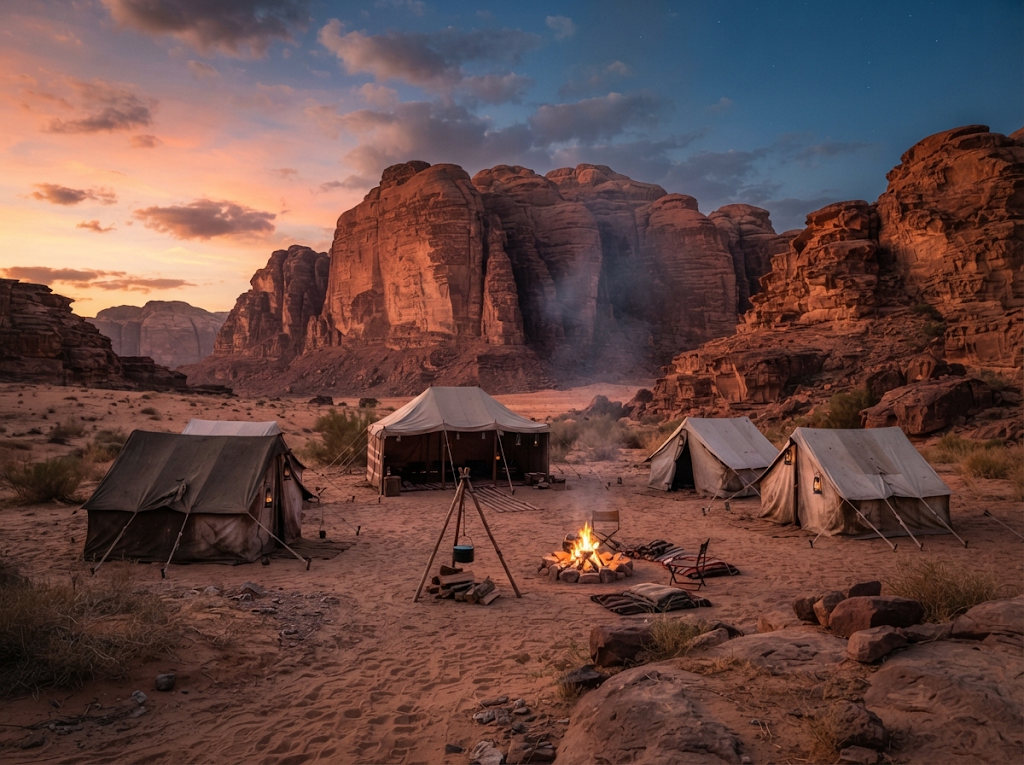
Few landscapes stay in the memory like a night in the desert. In the red valleys of Wadi Rum in Jordan, the dunes of Merzouga in Morocco or the white sands of Siwa in Egypt, small camps offer tents, tea over a fire, a sky full of stars and a quiet that visitors rarely find at home. Many of these camps are family businesses, run by hosts who know every path and every story, and many of their guests arrive from Britain, the United States and Australia. A desert guest cannot call a neighbour or step outside to find a shop, so clear information before arrival is part of hospitality and part of safety. This guide explains how camps, tour operators and guides can prepare Arabic and English materials for international travellers.
What Guests Worry About
Visitors are excited but anxious. They ask about the toilets, the water, the temperature at night, the food, the distance from the nearest hospital, the safety of the road, whether they will be alone with a guide and what to wear. A calm, specific answer to each question builds trust. A page that ignores them does not hide the worry, it only leaves the guest to find a different camp.
Describing the Experience Honestly
Say what a night at the camp is really like: the type of tent, the beds, the blankets, the shared or private bathroom, the electricity, the phone signal and the meals. Describe activities by duration, difficulty and cost, such as a jeep tour, a camel ride, a sunrise hike or a night walk. Photos should show the real camp, since a gap between pictures and reality is the main source of poor reviews. Government tourism sites, for example visitjordan.com, provide official information that you can link or cite.
Arabic Names and English Spellings
Place names, tribe names and dishes can be written in Latin letters in many ways. Choose one spelling for each name, and use it on the website, in emails, on signs and in guide scripts. Where a place has an Arabic name and an English name, give both once. Visitors searching online will use the spelling they find in guidebooks, so check how maps and booking sites write the name.
Language Support
Camps that receive many foreign guests often work with a partner that offers arabic translation services to prepare websites, booking messages, house rules and guide scripts. A translator who knows tourism will keep a warm tone and avoid stiff phrases, and will adapt expressions of hospitality that sound natural in Arabic but strange in English. Share photos and a short tour script, so the text matches the place.
Booking, Payment and Cancellation
Explain how to book, what a deposit is, which currencies you accept, whether card payments work in the desert and what happens if the guest cancels or a storm closes the road. State arrival and departure times, the meeting point and how to recognise the driver. Confirmation emails should be short, with the key facts at the top and a phone number for use on the day.
Safety Briefings
Safety information should be given before the trip and repeated on arrival. Cover water, sun protection, clothing, snakes and scorpions, vehicle rules, fire safety and what to do if someone feels unwell. Give emergency numbers and the name of the nearest clinic. Guides should be able to explain the main points in simple English, and guests should know who is responsible for decisions on the trip. For another example of clear communication in travel documents, see this article on translation for UK visa applications.
Respect and Local Customs
Guests appreciate short guidance on local customs: how to greet, what to wear in villages, how to ask before taking photographs, what to do when offered tea and how to behave around prayer times. Present these as a friendly introduction, not as a list of prohibitions. A guest who understands the customs behaves with more confidence and is welcomed more warmly.
Food, Diets and Allergies
Traditional meals, such as slow-cooked dishes in the sand or flatbread over the fire, are a highlight. Explain ingredients, spice levels and options for vegetarians, vegans and guests with allergies. Ask for dietary needs at booking, and make sure the cook understands them. A short bilingual card in the kitchen helps staff avoid mistakes.
Guides, Staff and Stories
The guide is the heart of the experience. Prepare a short English glossary for the most common situations: greetings, directions, safety words and polite phrases. Encourage guides to tell the stories of the place in their own voice, and then record or write them down so that the best stories can be shared with guests who read before they travel.
Reviews, Photos and Social Media
Guests share photos and write reviews, and your answers appear next to them. Reply in English, thank guests by name and answer concerns directly. Ask guests for permission before publishing photos of them, and respect the privacy of local families. Keep social media captions short and accurate.
Hospitality in Both Languages
Write a short welcome card in Arabic and English, put a glossary on the wall and keep a folder with answers to common questions. Review the texts every season. When the words are as warm as the fire, a night in the desert becomes the story that guests tell for years.